Collatz Labs
We’re building Beehive.py. Learn real Python by playing.
A factory game you play by writing actual code. No blocks, no pseudocode. Your program commands a swarm of bees, automates a factory and builds the Great Hive.
drawing · 15×15 of the 65×65 map
# fetch ore across the lakewhile get_pos_x() < 16: move(East) # water does not block if pick(): # bare node, by hand do_a_dance()
Take any number. Follow two rules. Where do you end up?
The Collatz conjecture is one of the simplest open questions in mathematics. Take a number. If it’s even, halve it. If it’s odd, triple it and add one. Repeat.
Do you always reach 1? Since 1937, nobody has been able to prove it. Two rules, one unsolved problem.
One of us does mathematics, the other works in finance. We picked the name because we both find this problem genuinely interesting. That’s the whole reason.
One game first, done right.
Collatz Labs is built to outlast any single project. But right now every hour goes into making the first one great: Beehive.py.
The lab’s first game.
Beehive.py turns learning to code into a factory game. You write real Python to command a swarm of bees, automate a growing factory, and build the Great Hive. Every line you write is a skill you keep.
Beehive.py
Learn real Python by playing.
Write actual code. No blocks, no pseudocode. From your first while loop to real concurrency across three interpreters.
See Beehive.py →Playtest keys from October 15, ask in #playtest.Playtest running, ask in #playtest for a key.
A mathematician and a banker, after hours.
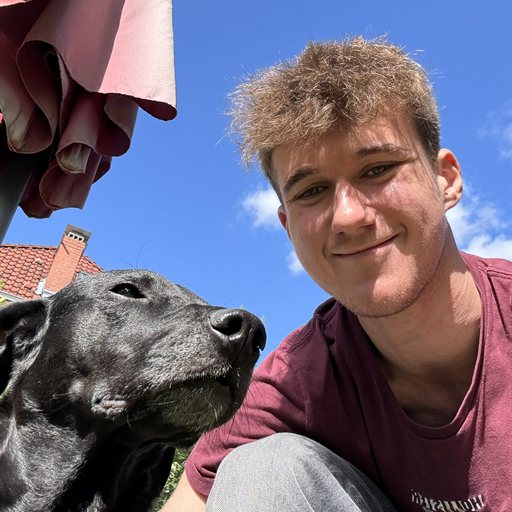
Collatz Labs is Johannes and Tristan, one deep in mathematics, one in finance, building after work between Roßdorf and Bottrop. No publisher, no budget, no deadline. We make the things we’d want to use, and we don’t ship them until they’re good.